
In the summer of 1958, the novelist Saul Bellow and his second wife, Sondra, were living in a crumbling mansion in Tivoli, New York. They had purchased the house because it was conveniently close to Bard College, where Bellow taught a literature class, but it had turned out to be badly in need of repair. It came with 14 large rooms on three floors, including a space in the basement for a dining area, which they furnished with a heavy mahogany table.
One evening in June, Bellow and his wife, whom he called Sasha, sat down together for dinner. Adam, their 16-month-old son, was asleep upstairs. The table was set with a vase of peonies from the garden, along with a tureen of stew and a whole watermelon. Before the meal was over, the table would be overturned, the dishes and a glass percolator shattered on the stone floor, the melon bursting open into a flood of black seeds. Rushing to get Adam, Sasha would escape in her car to the house of their neighbor, Bellow’s friend Jack Ludwig, with whom she was having an affair.
It was the turning point in the disintegration of their marriage, which ended in divorce two years later. Notably, however, the incident was omitted entirely from the most visible product of their married life, Bellow’s famed novel Herzog. After its publication in 1964, the book became a runaway success, dominating the bestseller lists for six months, receiving the National Book Award, and making its author wealthy and famous at last at 49. For the rest of his life, Bellow’s position at the peak of American letters would be unchallenged, culminating a decade later in the Nobel Prize. Shortly before his death in 2005, Martin Amis praised him as “the greatest American author ever.” (When he died that April, Slate alone ran at least three articles on his legacy, including a 6,000-word remembrance with contributions from 20 novelists and critics.)
Herzog was also what the critic Louis Menand called “a revenge novel,” with parallels to Bellow’s marriage that were obvious even at the time. Its protagonist, Moses E. Herzog, is a philosophy professor whose life is upended when his wife, Madeleine, asks for a divorce. After they separate, Herzog learns that Madeleine has been sleeping with his closest friend, Valentine Gersbach. Herzog eloquently describes his suffering in unsent letters to living politicians and dead philosophers, but he finds that his education has done nothing to prepare him for his private humiliations.
When the novel appeared, the consensus was that it was blatantly autobiographical. Madeleine was a distorted picture of Sasha—who carried on an illicit relationship with Ludwig, Gersbach’s minimally disguised counterpart—and the book derived much of its power from what seemed like Bellow’s confrontation with his own pain. The poet John Berryman wrote to Bellow, “Nobody has ever sat down and wallowed to this extent in his own life, with full art.”
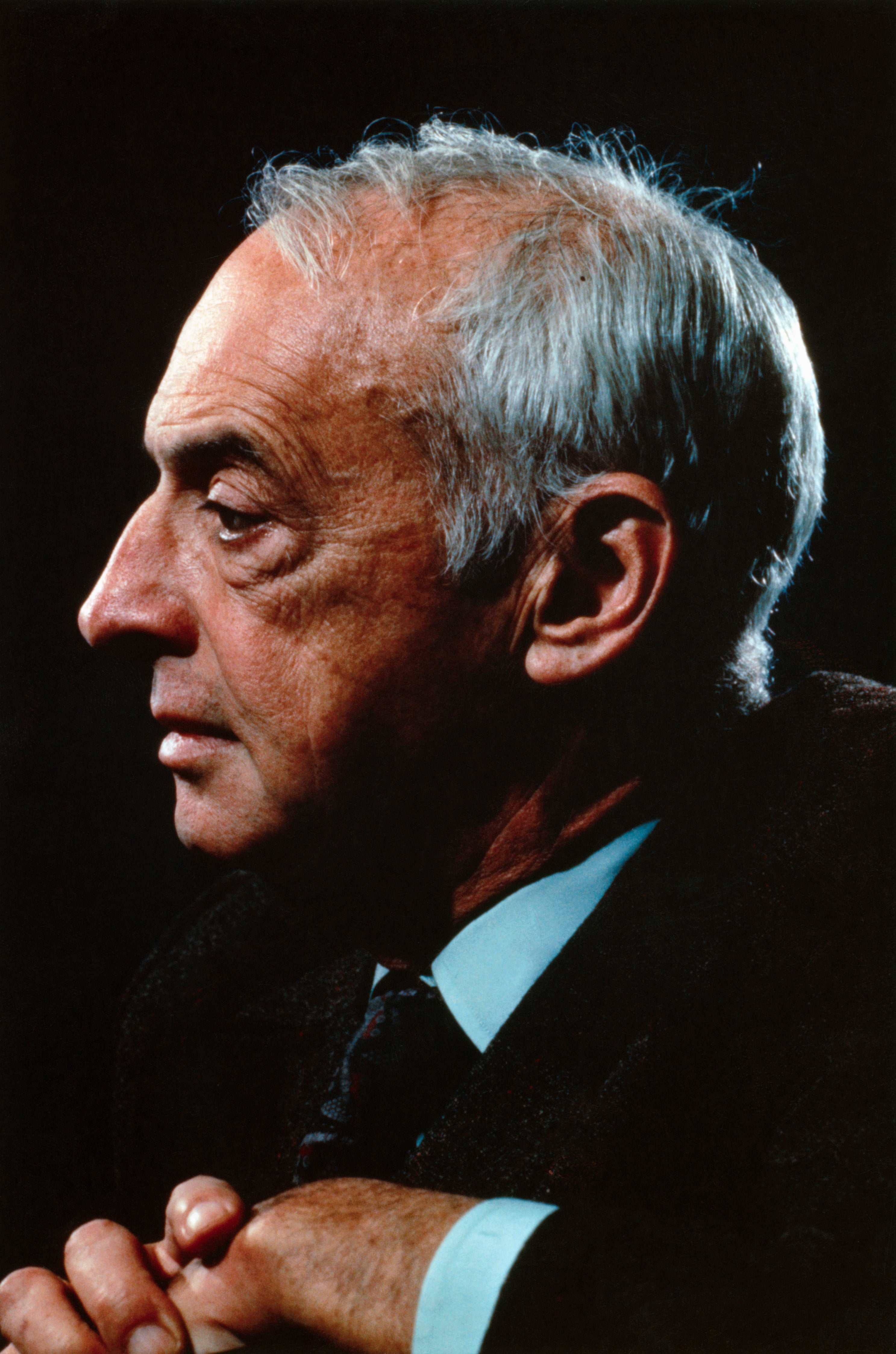
As it turned out, Bellow would never again grapple with his demons as openly as in Herzog, which is widely regarded as his masterwork. Yet even readers unfamiliar with its scandalous backstory might be troubled by its misogynistic depiction of the protagonist’s wife, who is repeatedly described as a psychopath. Madeleine is never granted a moment of kindness or happiness, and her abuse of Herzog in the published version seems totally unmotivated.
While it doesn’t require a great leap of the imagination to suspect that Bellow shaped the novel to depict himself in a favorable light, for decades, it was the only version of the story that readers were likely to see. More recently, however, Bellow’s biographers have shown that Herzog left out a key fact about the author’s marriage that changes the picture entirely: He was repeatedly physically violent against Sasha, who suffered serious injuries at his hands. When filled out by other sources—the full range of which have never been presented by any critic or biographer until now—the story that emerges is far more plausible, and more disturbing, than the one in Bellow’s novel.
What follows here is a triangulation between multiple independent versions of events, with highly variable but intersecting reliability, arranged together for the first time. (One crucial source is a deservedly forgotten novel with obvious parallels to Herzog, written by Ludwig, the third member of the love triangle, which turned out to be both embarrassing and revealing.) Searching for the truth about Bellow requires looking for the recurrence of tiny details—like the watermelon on the table—that allow these accounts to be spliced together, the way a documentary cuts between original footage and dramatizations with actors on a studio set, revealing damning similarities as well as differences that are often equally telling.
In the process of assembling this story, I was reminded of more recent instances of alleged domestic violence that have been litigated in public, notably the defamation suit filed by Johnny Depp against Amber Heard. Neither Heard nor Sasha was a perfect victim. Both were vulnerable to allegations of “mutual abuse,” which ignored the true balances of power in their marriages, and the narrative in both cases was shaped by a famous man who retaliated with all the resources at his disposal.
Herzog will always have vastly more readers than Sasha’s story, but my hope is that this investigation will go partway toward correcting the historical record. A writer of Bellow’s stature, who towers over the American canon and endures in classrooms and beyond, demands this kind of scrutiny. Our understanding of the Bellow who died in 2005 is incomplete, and this reckoning is long overdue, especially for those who believe—like I do—that Herzog is still worth reading.
Many of the accusations against Bellow can best be understood as part of a larger cycle of violence. Bellow remembered his father, Abraham, as a “tyrannical” man who beat all his sons. In the novella A Theft, Bellow’s narrator reflects wryly on a televised report about child abuse: “Most of what they showed was normal punishment in my time.” Bellow’s third son, Daniel, who told the biographer Zachary Leader that his father hit him “maybe three or four times,” wrote to the agent Andrew Wylie, “What I took for neglect and cruelty I now recognize as the standard Russian Jewish child rearing method, seldom seen in this country anymore.”
While Saul exhibited some degree of this behavior toward his high school girlfriend Eleanor Fox—“I was afraid of the guy,” Fox later told James Atlas, Bellow’s first biographer—there isn’t any evidence that he physically harmed his first wife, Anita Goshkin, who merely had to live with what Atlas describes as “Bellow’s self-absorption, his infidelities, and the outbursts of bristling hostility that visitors observed.” All sources agree that many women found Bellow attractive, and he indulged in numerous affairs.
By the fall of 1952, his marriage to Anita, with whom he had a son, was effectively over. One day, he placed a call to the literary magazine Partisan Review, where the telephone was answered by a 21-year-old receptionist named Sondra Tschacbasov. Sasha, as she was known to her friends, was a recent Bennington graduate, and Bellow reflexively flirted with her over the phone: “I don’t recognize your voice—you must be someone new,” he said. After asking for her name, Bellow professed to be “enchanted” by its Russian origins, declaring that he was coming over to meet her.
On arriving at the office, Bellow found a strikingly beautiful young woman with dark bangs, pale skin, and blue eyes. As he began to pursue her, he delighted in showing off her looks, but he was less interested in her emotions. From the age of 12, Sasha had been sexually abused by her father, the painter Nahum Tschacbasov, and she was devastated when Bellow implied that she had made it all up. “He really shocked me one day when he lashed out, saying that he wasn’t sure he entirely believed any of it,” Sasha later recalled. His doubts are reflected in Herzog, in which Madeleine reveals that she was abused as a girl. Herzog responds that “many people” have these experiences: “Can’t base a whole life on that. It doesn’t mean that much.”
In the meantime, Bellow’s star was rising. The Adventures of Augie March became his most acclaimed novel to date, but sales were modest, and he accepted a teaching position at Bard. His fellow faculty members included Jack Ludwig, a colorful Canadian with a visible limp caused by gout. (His counterpart in Herzog has a wooden leg.) Ludwig promptly attached himself to Bellow—he flattered and openly imitated him—and grew friendly with Sasha as well.
During the fall of 1955, Bellow lived in Reno for three months to obtain a divorce from Anita, joking that he agreed to marry Sasha to “get into her pants.” At their small wedding, the four guests included Ludwig and his wife, who eventually settled in the same area of the Hudson Valley as Bellow and Sasha. When the Bellows moved into their ramshackle house in Tivoli, Sasha was five months pregnant. Their son, Adam, was born on Feb.
19, 1957.
While Bellow worked on his novel Henderson the Rain King, cracks began to appear in his and Sasha’s marriage, and a year later, it erupted into violence. Figuring out what truly happened calls for combining multiple sources. Highest in credibility are Bellow’s and Sasha’s letters, although we need to account for each correspondent’s tendency to emphasize details that support his or her version of events. Another crucial document is Sasha’s unpublished memoir, What’s in a Name?, which she gave to Leader before her death.
Next on the list are Bellow’s fictionalized accounts in both the published text of Herzog and his earlier drafts, never examined before in this light, which I reviewed in his papers at the University of Chicago. As a source of information, Bellow’s fiction needs to be used with caution, but his biographers have all drawn on it extensively. Bellow is the most autobiographical of authors, with portraits of real people and events incorporated virtually intact into his stories.
One last source is the most tantalizing of all. In 1968, Jack Ludwig published the awful autobiographical novel Above Ground, a funhouse-mirror version of Herzog that offers his own account of Bellow and Sasha’s relationship. Ludwig’s surrogate is named Joshua—as opposed to Bellow’s Moses—and lives near a sculptor, Louie, and his wife, Mavra. Josh finds himself drawn into their lives, even as his wife, Maggie, warns him to keep his distance: “They kick the shit out of each other the way other people play a hand of gin rummy.”
As evidence, Above Ground is undoubtedly problematic, and its episodes of violence between Louie and Mavra are secondhand versions, at best, of what Bellow or Sasha told Ludwig. But if anything, the author’s clumsiness makes his methods more transparent. Although Ludwig imitates Bellow in his use of personal details, he lacks his friend’s gift of invention. Where his account overlaps with the others, he provides enough corroboration to inform the overall picture. This article is the first time that Ludwig’s novel has been used to fill in the gaps between the lines of Herzog, which is clearly what he wanted all along.
In her correspondence, Sasha referred to three specific instances of domestic abuse. On Sept. 24, 1962, she wrote to Bellow, “There are a number of people around here and in Minnesota who remember your threats to beat me up, and others who remember that you did, in fact, do so on two occasions during our marriage.” Three weeks later, Sasha told Bellow in another letter, “You somehow have had to justify these now three separate scenes of your beating or attacking me, with some physical provocation on my part which simply did not occur.”
These three events—two during their marriage, once after their divorce—can be identified and dated precisely. Bellow’s first major biographer, Atlas, recounted this abusive behavior only in passing in Bellow: A Biography, which was published during its subject’s lifetime, but the first volume of Leader’s exhaustive The Life of Saul Bellow went into much greater detail. When that book appeared in 2015, however, two years before #MeToo, its description of Bellow’s violence against Sasha was barely discussed by reviewers, when it was mentioned at all.
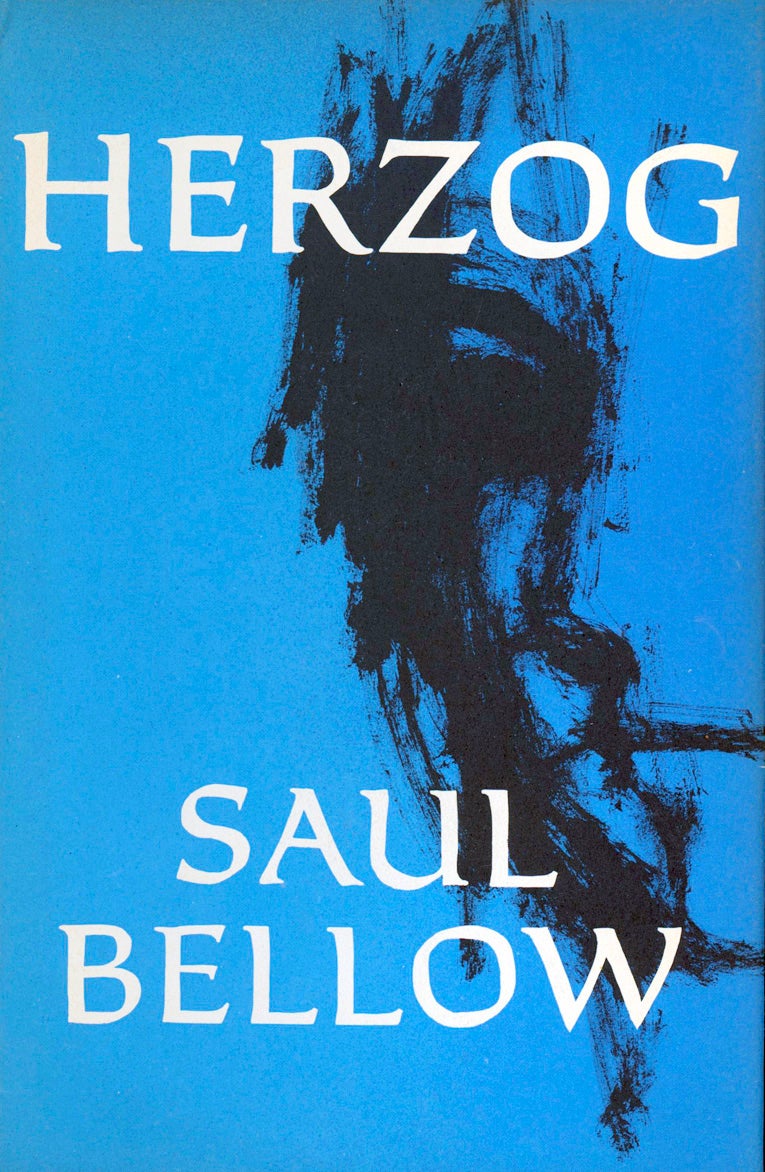
According to Sasha’s letters, Bellow assaulted her for the first time in the spring of 1958. Although the circumstances of this incident are less clear than for the episodes that followed, its origins can be traced back to Bellow’s dissatisfaction with Sasha’s housekeeping. In Herzog, his fictional surrogate complains of “eggshells, chop bones, tin cans under the table, under the sofa,” which provoke him to disproportionate outbursts of anger: “It was always something trivial that set him off—a bounced check, a chicken that had rotted in the icebox, a new shirt torn up for rags. Gradually his feelings became very fierce.”
Sasha describes these scenes more explicitly in her memoir. “He was either distant or lashing out at me,” she remembered. “I irritated him mightily, he lost his temper over the house, grabbing me by the shoulder like an unruly child, marching me to the scene of my latest failing (the dust in front of the door, the pot I forgot to clean, the socks in the sink).” Leader, the only biographer to use her memoir as a source, briefly alludes to the consequences: “On occasion, Sasha claims, the lashing out was physical, though he was ‘always contrite afterwards.’ ”
In her letter to Bellow dated Oct. 18, 1962, Sasha mentions two incidents of violence during their marriage, the earlier of which seems to belong here: “You report that I ‘went for a knife.’ As you know, I was reaching for the telephone to call for help since we had been quarreling violently. There was no knife about.” Sasha never reveals whom she was calling, but it was almost certainly the Ludwigs.
A second later, the telephone rings in the pages of Above Ground. In Ludwig’s novel, Josh receives a call from Mavra, asking him to come over. After he hangs up, Maggie, his wife, warns him not to get involved, but Josh insists: “Mag, he may be killing her.” Driving to the house, Josh finds Louie standing out front, already launching into an explanation. “We had a physical struggle. Nothing. She clawed me. To calm her I threw her to the floor a little in self-defense.” As Josh heads inside, Louie adds, “She’ll say I beat her up. Maybe I gave her a little nudge with my shoe when she fell on the floor—helped her collect herself.”
In the hall, Josh opens the door leading to the basement kitchen, where he sees Mavra giving the baby a bottle. After Mavra accuses her husband of hurting her, Louie shoots back, “I barely tapped you.” Claiming that he hit her with his hat—a detail that reappears in Bellow’s actions elsewhere—she shows Josh the visible signs of abuse: “Mavra stood up, raised her sweater; three red fingerwelts stood out on her ribs.” She asks to leave, saying that she is afraid of her husband, who lifts his hat as a threat. As Josh pushes them apart, he notices that Mavra’s eyes are full of tears. At that point, the scene abruptly ends.
Shortly after this incident, in the real world, Ludwig fell in love with Sasha, whom he informed of Bellow’s infidelities. According to Sasha’s unpublished memoir, they became closer, and in May, Ludwig kissed her. Sasha was surprised, but she reciprocated his affections. In turn, Ludwig revealed more about Bellow’s affairs with a student at Bard and a Japanese woman in New York, both of whom would later be fictionalized in Herzog.
The second known act of assault—the one that began in the basement dining room in Tivoli—occurred in June, shortly after Sasha began her clandestine relationship with Ludwig. According to her memoir, when Sasha reminded Bellow of a $5,000 loan that they had received from her mother, he shouted back, “That was no loan. She gave us that money.” Sasha, who felt that her mother had given them “everything she had,” was shocked. “We were in the dining room, he pounded on the table, the dishes rattled and slid around. ‘I won’t be made a fool of by the two of you!’ he roared, and in that moment I saw him through a red haze of fury and, in an adrenalin surge, lifted the table at my end and flung it at him.”
Although Bellow cut this incident from the final text of Herzog, two versions survive in manuscript form. One closely follows Sasha’s account, with Herzog’s wife upending the table, smashing the watermelon and glass percolator on the floor. Another draft presents the wife’s actions as a direct physical attack. Herzog reflects that his psychologist “said my violence bullied people”—a significant reference in itself—“but come to think of it he didn’t say what was the object of her smashing of china, clawing books, flinging a tureen of stew and a whole watermelon at my head.”
The scene also appears in a crudely fictionalized form in Above Ground. In Ludwig’s telling, Louie grabs at Mavra’s shoulder, tearing her blouse as she pulls away: “She whirled to shake him off, bumped his table, his bread and board, backdrop, stage set. One lift, so easy, everything sliding, flipped, scattered over the floor—silver flowers glass soup tureen splattering red watermelon.” Despite the embarrassingly bad writing, its parallels with the unpublished drafts of Herzog—the tureen, the watermelon—suggest that it was based on information that Ludwig heard from one or both participants.
What happened next—in real life and in fiction—is less clear. Herzog confesses in one draft that he lashed out violently after his wife upset the table, admitting, “I gave her a powerful kick in the slats,” or ribs. In another version, Herzog says, “I did hit her in the country. She overturned the dining room table.” This all strongly implies that Bellow kicked or hit Sasha during the argument. As will soon become obvious, Bellow was more likely to remove, rather than add, material that was unflattering to his fictional alter ego.
In another manuscript variant, Herzog grabs at his wife’s hair as she attempts to leave the house with their child. This detail also appears in Above Ground, which was written without any knowledge of the material in Bellow’s drafts: “She tried to get away. His hand tightened. She heard her hair tearing at the scalp, heard it then felt it.” In Ludwig’s version, the Bellow character then strikes his wife’s neck, draws back his foot as if to kick her, and cuts her cheek with his key ring.
Some of these details may be fictional. Sasha mentions no violence at this point in her memoir, writing, “I ran upstairs, hoisted Adam and grabbed the car keys, downstairs in a flash. I jumped in the car. He stood in the driveway, daring me. ‘Get out of the way, Saul, now, or I’ll run you over,’ I shrieked, and started up the car—he jumped away, and I went to the Ludwigs.” Bellow echoes Sasha’s account in his earlier drafts of the novel, as Herzog tries to stop his wife by standing in the road. Seeing murder in her eyes, he dives out of the way as she drives off.
In her Oct. 18, 1962, letter to Bellow, Sasha described a more violent conclusion to the scene, which doesn’t appear in her memoir. “You have often told a story of how I tried to run you down with the car in Tivoli. As you know perfectly well, I was trying to leave, with Adam in the car and you deliberately put yourself in my path knowing, of course, that I would not run you down, but stop. Unfortunately I did stop, for as you know, you dragged me from the car by my hair across the lawn, kicked me and whipped me with your cap.”
The only source for what happened immediately afterward is Above Ground, in which an injured Mavra arrives at Josh’s house: “Her cheek was bleeding, one eye was bruised red.” As his wife takes the baby, Josh helps her out of the car, noticing that the hand at Mavra’s ear is covered in blood. Mavra says to him despairingly, “My hair—Josh, both his hands were full.”
As she speaks, the phone at the house rings. On the other end is the Bellow character, who is ready with his own take on their “little fracas”: “We’re both strained. You know how it is with husbands and wives, pal? I had to tap her a couple of times. Pulled the kitchen knife on me. Tried to run me down with the car—violent. Poor kid. There’s a history of seizures in their blood.”
Back in Bellow’s manuscripts, Ludwig’s fictional counterpart goes to Herzog’s house to inform him that his wife will be staying in town. He also asks if Herzog tried to tear her hair out. Given its recurrence in three independent accounts, it seems very likely that Bellow did pull Sasha by the hair that day, either in the house or after yanking her out of the car.
Bellow later referred to this incident as their “blowup,” writing to the author Keith Botsford, “We had an explosion and it blew everything to bits except the essentials.” Leaving with her son for New York, Sasha considered divorcing Bellow, but she returned when he began teaching at the University of Minnesota. One of his conditions for accepting the position was that another job be found there for Ludwig, who was still concealing his affair with Sasha.
Sasha also told Bellow to undergo therapy. He ended up seeing a psychologist who, rather questionably, became Sasha’s therapist as well. Bellow wrote to a friend, “Sondra has a nervous disorder, in itself not too serious. It doesn’t affect her health but it does account for our martial disorders to a considerable extent.” He told his editor that Sasha had “a small lesion of the temporal lobe” that was responsible for her behavior: “She may have to take drugs to control it. Meanwhile she’s having treatment from my doctor. He says it’s not a dangerous illness but needs to be understood and watched.”
In the meantime, Sasha was still sleeping with both Bellow and Ludwig. After she became pregnant, she had no way of knowing who the father was. (She eventually had an abortion.) Finally, in the fall of 1959, Sasha asked Bellow for a divorce. Bellow was struck by her “icy control,” which he fictionalized in one of the most famous scenes in Herzog. Sasha provided a somewhat different account of the conversation, claiming that Bellow agreed that they were no longer happy together, only to ask plaintively, “But who’ll cook for me?”
Afterward, Sasha allowed him to see Adam just once a week, saying that she would call the police if he tried to come to the house. Bellow, for his part, was already disseminating his version of events, writing to Botsford, “It’s she who’s doing this, cutting me off, taking away Adam. I can’t say for what failures of mine. Not the ordinary ones like money, sex, rivals or any of that. But maybe because there have been no such failures.” In a letter to his editor, Bellow referred to his wife’s “insect heart,” and he concluded, “But really I love her too much and understand her too well to feel the murderous hatred that would help me.”
Sasha didn’t ask for any alimony, only child support, and the divorce was finalized in June 1960. Writing to Sasha’s lawyer, Bellow said, “I tried to be a husband to that poor castrating girl—an odd desire, but I had it.”
Incredibly, Bellow still didn’t know about Sasha’s affair with Ludwig. In the fall, however, one of her acquaintances informed Bellow for the first time that Sasha had been sleeping with the man he had seen as one of his closest friends.
Bellow reacted immediately with threats, speaking wildly of obtaining a gun and telling Ralph Ross, the head of the humanities program at the University of Minnesota, “I’m going to catch that son-of-a-bitch Ludwig and beat him to a pulp.”
In fact, no confrontation, violent or otherwise, occurred between Ludwig and Bellow. Instead, he simply attacked Sasha one last time.
On Aug. 31, 1962, more than two years after the divorce, Sasha and Adam were visiting Ann Berryman, the ex-wife of Bellow’s friend John, in Peekskill, New York. When Bellow came to pick up Adam for the weekend, Sasha could tell that he was prepared for a fight. She wrote in her memoir:
He was spoiling for it, I could see his tense lip and twitch that always telegraphed a simmering rage. But I was reckless and confronted him about the lateness of the checks, and said it was a problem now, since I was running out of money. He made some remark, about how the money was for Adam not for me. I brought up the money he never paid my mother and should give to me, now that she was dead. He countered with something nasty about not supporting my lover, so I slapped him and he grabbed me by the pony tail and swung me around punching me with his other hand. I was bruised for a week and took out a restraining order. I knew that I had really provoked him, but the extraordinary violence was bubbling inside him, barely controlled, waiting for a trigger.
This account dates from years after the fact, but many of the same details appear in a letter that Sasha wrote to her lawyer on Sept. 10, 1962. She made no mention of a slap, writing emphatically, “I did not provoke this attack, nor did I make any physical gesture towards him which could even remotely [be] mistaken for an attack.” Saying that she had been saved only by Ann Berryman’s intervention, Sasha provided a graphic list of her injuries: “Severe bone bruises behind one ear, cuts on my left temple and left eyelid, and a bad bruise on my left breast. My scalp is a mess of lumps and bruises.”
A few weeks after the incident, Sasha wrote to Bellow that the police—who had been given his photo “in the interests of my personal safety”—would be called if she ever saw him near her apartment. She also brought up the “two occasions” on which he beat her while they were married. On Sept. 30, Bellow responded with his own account of what happened:
The violence of that occasion was provoked by you, perhaps deliberately. You tore my clothing, bruised me, and had to be restrained by Ann Berryman from continuing your attack. … Your pugnacity is a matter of record. Even before the divorce you struck me with your fists. You tried to run me down with the car. On the day when you claim to have been assaulted, I came home with bruises. You have been known to do things you could not remember later. My “violence” is probably another one of your hallucinations.
Bellow’s last line was close to the textbook definition of gaslighting. He also contradicted himself, defending his behavior while simultaneously implying that it had all been in her imagination.
In her letter of Oct. 18, Sasha turned this “hallucination” argument back on Bellow. During his earlier violent episodes, she wrote, he had imagined that she was going for a knife or trying to run him down: “You cannot take a thought that flashes, perhaps in your own mind, like, ‘I wonder if she will stop the car’ or, ‘Would she like to kill me’ and translate that into something that actually happened. These things did not happen. What is true is that I was in a car and trying to leave; that I was reaching, but for a phone; that I did not provoke or attack you in Peekskill, but that you were carrying out a threat you made in Minneapolis.”
It was the last known instance of violence in their relationship, but Bellow no longer needed to resort to the blunt instrument of assault. He was already preparing a more subtle revenge in Herzog, which he was composing with two distinct audiences in mind. As the literary bestseller that had long eluded him, it would find a huge mainstream readership, but it would also be read carefully by the people in his life. For them, he wanted the novel to convey a specific message. As Bellow’s son Adam later said to Leader, “When Saul would enter the endgame of a marriage, he would start building a case that the wife was crazy.”
On Jan. 22, 1960, Bellow had written to his editor with an update on his latest project: “The story is about Sondra, and it may be a trial run, who knows?” A novel inspired by the end of the Bellows’ marriage necessarily had to include Ludwig, who was incorporated almost unchanged into the book. Bellow made no secret of the fact that he viewed Herzog as an act of revenge, telling a former student, “I’m going to stick him into my new novel. By the time I’m through with him, he’ll be laughed right out of the literature business.”
When it came to depicting Bellow and Sasha, however, the originals had to be revised more thoroughly. On encountering the critic Wayne Booth in Hyde Park, Bellow said lightly that he was “going through the manuscript and weeding out parts of myself that I don’t like.” His protagonists always tended to be idealized versions of himself, but Herzog, for once, had to be smaller than Bellow, a victim who grew more blameless with every revision, even if it undermined the logic of the narrative.
Bellow’s papers reveal that he carefully pruned away references to Herzog’s infidelities, which are only fleetingly addressed in the final version. In the published text, Madeleine’s aunt scolds him, “You’ve been reckless about women.” Alluding to his sexual problems, Herzog implicitly concedes that he was unfaithful: “There was some trouble for a while. But not in the last two years. And hardly ever with other women.” Bellow cautiously incorporates two of these relationships into the book, but he moves them conspicuously outside the timeline of Herzog’s marriage.
Even more significant is the minimization of the main character’s violence, which in the finished book is confined to fantasy, although traces of it remain. Madeleine’s aunt tells him, “She says you were a dictator, a regular tyrant. You bullied her.” Another character alludes to his wife’s description of his “intolerable temper which often frightened her.”
These threads are left mysteriously hanging in a novel that vigorously dramatizes every other aspect of Herzog’s life. In earlier drafts, however, they were crucial. Bellow referred in his notes to Herzog’s fits of rage over money, which cause him to shout, bully his wife, and pound the table. In the revision, he cut all mentions of Herzog’s hitting or kicking Madeleine, as well as a telling remark from his psychologist: “Obviously she’s afraid of you. She thinks you may murder her.”
The omission of this material drastically affects how the reader understands Madeleine’s actions. In the final text, Herzog laments, “Suddenly, because Madeleine decided that she wanted out—suddenly, I was a mad dog. The police were warned about me and there was talk of committing me to an institution.” According to Bellow’s biographers, in real life, Sasha had more than enough reason to be concerned for her safety. In the novel, Madeleine’s fears seem inexplicable.
Bellow also scaled back Herzog’s violent fantasies. In the published novel, Herzog admits that he feels capable of murdering the guilty couple, and he engages in an extended reverie: “Herzog … pictured what might have happened if instead of listening so intensely and thoughtfully he had hit Madeleine in the face. What if he had knocked her down, clutched her hair, dragged her screaming and fighting around the room, flogged her until her buttocks bled. What if he had! He should have torn her clothes, ripped off her necklace, brought his fists down on her head. He rejected this mental violence, sighing. He was afraid he was really given in secret to this sort of brutality.” In the drafts, Herzog engages in even darker daydreams—kicking his wife, slashing her face, dismembering her—that were cut from the finished text.
By the final version, these murderous impulses are transferred almost entirely to Madeleine. “In spirit she was his murderess,” Herzog asserts in one passage, claiming this justifies any revenge he could take. In another section, he remembers “the terrifying menstrual ice of her rages, the look of the murderess.” Yet Madeleine’s actions offer no reason for the reader to see her as dangerous. Bellow, usually a master of vivid detail, is content to repeat the word murderess.
Notably, he cut the dining-table episode, perhaps because it was inconsistent with his portrait of Madeleine as icy and calculating. Instead, he filled the book with vague allusions to mental illness. In early drafts, the wife is called Juliana, which he changed to Madeleine, or Mady—the mad right there in her name, like the hurt in “Herzog.” Without any evidence, Herzog says that her behavior matches a checklist of the symptoms of paranoia, including “Homosexual Inclinations” and “Hostile Projections,” and his psychologist agrees that she is delusional.
Even on the novel’s first publication, many critics noticed its imbalanced treatment of Madeleine. In the New Republic, Bellow’s friend Irving Howe wrote, “The portrait is unjust, an utter libel, but a classic of male retaliation. … One suspects Bellow of settling private scores.” Adam Bellow later told the historian David Mikics, “It was impossible to recognize my mother in that portrait.”
In 1968, Sasha wrote to Bellow that she had been humiliated by the book, but added, “I forgive you Herzog, as I assumed you forgave me Jack.” Bellow fired back: “There is another book, isn’t there? It is the product of two minds and two spirits, not one. … The letters of the heroine are consciously superior in style, but the book is garbage.” (His false equivalence of Herzog and Above Ground was ridiculous—the latter was dead on arrival—and Sasha denied collaborating with Ludwig.)
Sasha was the only participant who was never allowed to tell her side, which was left to her husband’s biographers. Atlas mentions the second instance of violence, which he incorrectly divides into two separate incidents: “One particularly acrimonious scene ended with dinner flung on the floor. Another time, Bellow claimed that Sondra had tried to run him over in the driveway.” For the third, Atlas merely offers a quotation from his only interview with Sasha: “He beat me up … [I was] bedridden for a week. Did I give him a slap? I did. But he retaliated violently—more than once.” Atlas contents himself with a reference to Bellow’s “problematic marital history” before simply moving on to the next marriage.
Bellow famously hated Atlas’ book, which was widely seen as a hatchet job. When the first volume of Leader’s biography appeared 15 years later, many reviewers saw it as an attempt to correct Atlas’ unflattering portrayal, but it describes these episodes in much greater detail, with a forensic emphasis on giving equal weight to both sides. On the Peekskill incident, Leader notes, “In the memoir, Sasha admits that she slapped Bellow and provoked the violence,” in contrast to the letter in which she denied attacking him: “Here, too, there is room for equivocation, though only just. A slap might not be thought to constitute an ‘attack.’ ” Pointing out the contradictions in Bellow’s account, he writes, “Both parties were shading the truth.”
In justifying his inclusion of this material, Leader also cautions against using the novel as evidence: “These accusations and counteraccusations are rehearsed here because they are part of the life Bellow lived as he wrote Herzog,” Leader writes. “Real life is woven into fiction almost immediately. To look to the novel for what really happened—who did the provoking, how much violence there actually was, who lied or shaded the truth—or even what Bellow thought happened, is futile.”
Yet elsewhere, Leader and Atlas constantly look to the fiction to illuminate the life. There is hardly any point in writing a biography of Bellow without considering how events like this were incorporated into his work. Apart from the drama of his marriages, his affairs, and his transformation of real people into characters, his life was outwardly uneventful, which makes it all the more surprising that none of the major reviews of Leader’s book seemed to take any notice of Bellow’s abuse of Sasha.
This was partly an accident of timing. The first volume of The Life of Saul Bellow appeared in 2015. When I asked Leader if he would have reworked certain sections in light of the shifting conversation around abuse by powerful men, he replied, “The ‘conversation’ may have changed, but I don’t think the literary biographer’s—or this literary biographer’s—approach should change. In the case of violence in the relation between Sasha and Bellow, present all the relevant information, suppress nothing, and show how what happened in real life, as much as it can be determined, was transformed into fiction. Bellow wrote very close to life and the hurt and unfairness that resulted from this transformation—for Sasha, for Adam, for others—must also be fully presented, as it is in my book.”
In any biography of Bellow, Sasha will naturally be subordinated to her husband’s career. As Leader notes of Above Ground, “Louie is a secondary character both in Mavra’s life and in the novel, as Sasha claimed Bellow was in her life.” Sasha, who eventually left Ludwig as well, never believed that she was defined by these relationships. “She and Bellow were only briefly married, she reminded me several times,” Leader writes, “while her second marriage, according to her son and others, was strong, happy, and lasted more than forty years, until her death in 2012.”
After their divorce, Sasha lingers in Bellow’s biographies mostly as a nagging presence in his letters, constantly asking for financial support. Yet it remains possible to glimpse something more. In his own memoir, The Shadow in the Garden, Atlas describes a tribute Adam gave at Sasha’s funeral: “Divorced at twenty-nine, she had no money and couldn’t pay the phone bill; she supported them by going into the city to write abstracts for an engineering journal. She designed jewelry that she sold at the crafts fair on Columbus Avenue. She didn’t want her son to be deprived of culture.”
For some readers, Sasha’s experience may seem less significant than Bellow’s literary achievements. At the same time, Bellow’s inability to create convincing women, which is often treated as a minor failing, should be relevant in assessing the writer routinely hailed as the greatest novelist of his generation. His weakness with them on the page was inseparable from his reluctance to empathize with them in his personal life. Despite his repeated infidelities, he married five times, and the women tended to stay the same age as he grew older.
This side of his personality affected his fiction, and even Bellow knew that it was meaningful for other reasons. Leader opens his biography with an account of Bellow, on his deathbed, asking the scholar Eugene Goodheart, “Was I a man or was I a jerk?” In his introduction, Leader makes his own views clear: “He was no jerk.” The question might seem impossible to resolve without more definitive proof, ideally from an impartial third party.
In the second volume of his biography, Leader shares a story about Bellow and his longtime girlfriend Maggie Staats, who was less than half his age. Bellow’s affair with Staats began while he was married to his third wife, Susan Glassman, and continued after his divorce. In 1969, they traveled to Spain, where they saw the editor Barley Alison and the literary agent Toby Eady. Leader writes:
[Bellow] was also “incredibly jealous” during the holiday, especially of Toby Eady, with whom he thought Maggie was flirting. One evening, after drinks on the terrace at Casa Alison, as the party headed inside for dinner, Bellow held Maggie back and slapped her so hard in the face “you could see the impact of his hand … all through the meal.” In recalling the incident over the telephone forty-five years later, Eady could barely contain himself. “I think he’s a complete shit,” he said. “The only man in my life who I have seen hit a woman.”
The imprint of Bellow’s hand on Staats’ face should resolve any doubts on the matter.
Six decades after its publication, Herzog remains a great novel, and it can still speak urgently to readers who feel lost in the world, even if its vision of reality is limited to one man’s inner life. Whether or not it was worth the cost is another question. Bellow hinted at his own thoughts on the subject to the actress Helen Garrie, who was romantically involved with him in the 1960s. Garrie told Atlas that Bellow’s seductions were the acts of a “most insecure man,” and she never forgot a remark that he casually made: “Women are the rails on which men run.”