Sign up for the Slatest to get the most insightful analysis, criticism, and advice out there, delivered to your inbox daily.
I read at least 100 books a year. People are always impressed when I tell them this. But what I think is more notable is how I do it: I read only hardcover or paperback books.
That’s right. Every book I read last year was a physical book. I turned through literally tens of thousands of pages. I don’t think I’ve touched a Kindle in over a decade, and if I get my way, I never will again.
I have always been a big reader. In first grade, I read all the Harry Potter books. Throughout elementary school, I devoured series like Percy Jackson and The Hunger Games. Later on, in middle and high school, I became obsessed with other dystopian fiction books: Divergent, Matched, Uglies, and the like. As a member of Gen Z, I have had the option of reading books digitally for most of my life—and I didn’t initially start out as a physical-book purist. When I was a kid, packing for sleepaway camp, I’d load up a Kindle with books to avoid stuffing my duffels even more. Though I gravitated toward physical books, I was open to e-readers.
And then, in college, I pretty much stopped reading for pleasure at all. Like many other college students, I was inundated with required readings and had very little time—or energy, for that matter—to read books just because I wanted to. So when I graduated (and began an internship at this very publication!), I decided I would try to spend my newfound free time reading again. I joined the New York Public Library, requesting books that others had consistently recommended to me. I revamped my Goodreads account to curate a new list. And I set out to read a total of 50 books that year, a goal I surpassed by six.
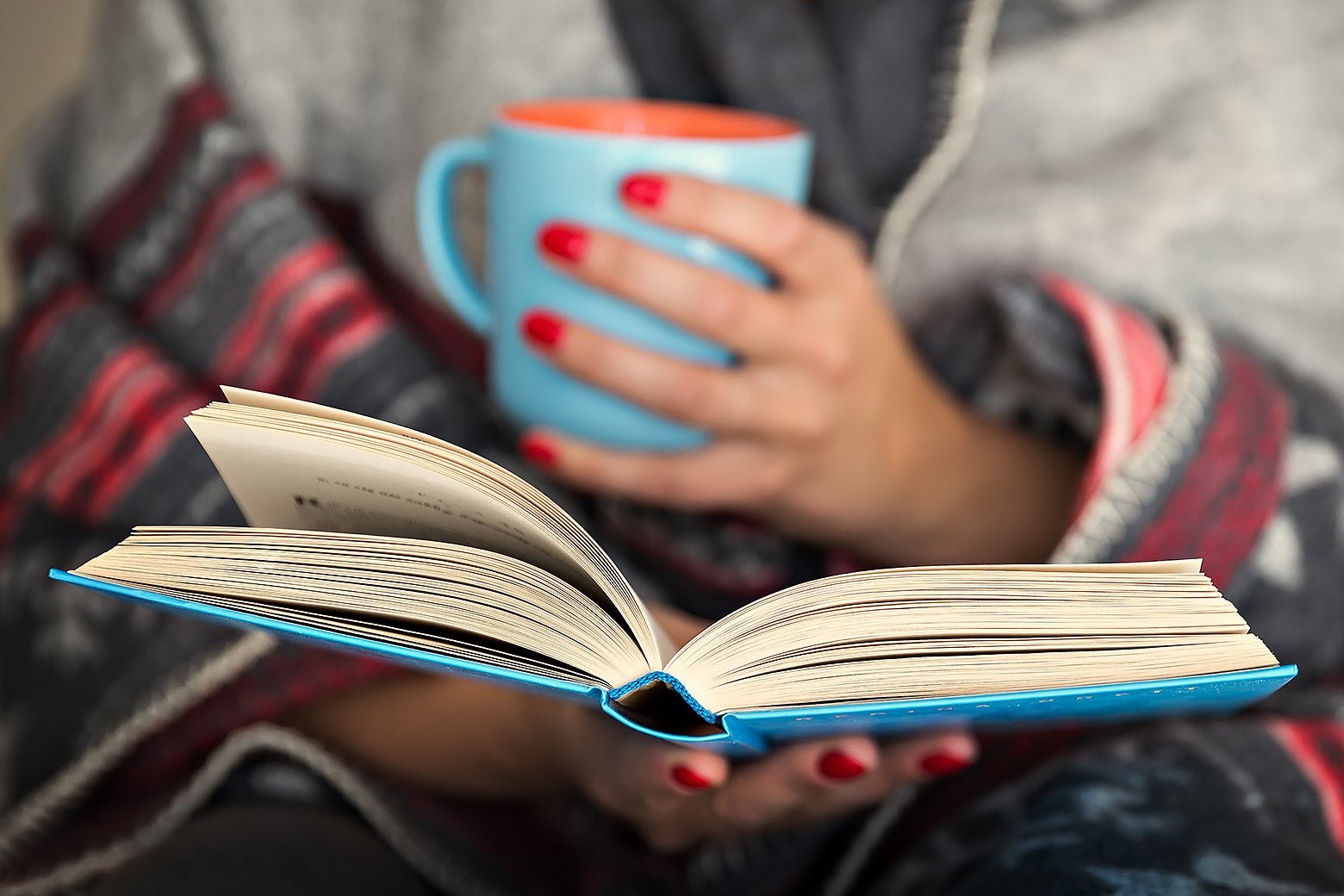
As I fell back in love with reading that summer, it was reading a physical copy of Chanel Miller’s Know My Name that reminded me why I enjoy reading so much in the first place. It’s not just getting immersed in a story; it’s the physical experience of reading too: I loved holding an actual book in my hands, admiring the physical cover, feeling—and hearing—the pages. I personally can’t comment on the smell of actual books, but people say that it can also enhance a reading session. And I am fond of collecting bookmarks. You can’t stick those in a Nook!
It’s definitely not the most conventional way to read among my age group, especially given my lifestyle. I travel a fair amount, and after I graduated from college, I spent months bopping around various European cities before landing in Amsterdam a couple of years ago. (And, these days, I’m not infrequently on planes to see family back in the States.) Many people over the years have recommended that I get an e-reader so I don’t have to lug around books in my suitcase.
I understand why e-readers are popular. They’re very light, a fraction of a book’s weight. With a few clicks, you can buy a book (at a much lower price than you’d pay for a hardcover) or request one from a local library. You don’t have to worry about cluttering your living space with titles you’ve read once and may never read again. And unlike iPads or phones—which apparently some sickos read books on—their screens usually won’t strain your eyes.
But I’m sticking to old-fashioned books. In addition to the tactile experience, I really enjoy the actual process of trying to find new things to read. I have a soft spot for used bookstores: Visiting one in every new city has become a ritual of sorts for me. And last year, I got a library card, paying about $40 total so that I could take full advantage of the Amsterdam public libraries’ book collection. Believe me, I was just as surprised to learn that library cards cost money here, but it seems a worthy price to pay for unlimited borrowing. I can reserve English books online and pick them up when they’re ready at my local branch, which is just a block away. I often ask friends with similar tastes to lend me books they liked. If I’m traveling and visiting family, I’ll peruse their library and borrow something that seems interesting. I can usually finish it, depending on the length of stay. More rarely, I’ll buy books new, though usually only if I’m in a bind and need something to read for a trip.
And while I do hold on to some books, I don’t like to accumulate too many. My unofficial rule is that I can keep enough to fit on just one shelf. After all, little free libraries are worldwide and a great way to off-load and, if you’re lucky, pick one up too. The options aren’t always what I would normally pick, but that only makes it more fun.