Sign up for the Slatest to get the most insightful analysis, criticism, and advice out there, delivered to your inbox daily.
CPAC was never for the cool kids.
The Conservative Political Action Conference has been a fixture of the American political landscape for half a century, and for much of that time its party scene has been well chronicled in fact and in fiction. Yet its parties, even at their most decadent and depraved, were never quite cool. After all, this was still a conference for political activists held in a Washington hotel. It wasn’t spring break in Cabo.
The conference served a number of roles besides being a location for young liberal journalists to gawk at even younger conservative activists. It was a trade show for consultants and vendors, many of whom viewed it as a prime place to woo potential clients or show off clients to potential donors. It was also a vacation destination for a certain type of older conservative, who would save up to spend three days in a room with fellow right-wingers, taking in the sights of D.C. and seeing some of the personalities that they had long followed on talk radio or cable news. And at its core, it was simply a convention, a chance for people from across the country who belonged to the conservative wing of the Republican Party to get together once a year. The result was that it united attendees ranging from the earnest khakis-and-blazer types to the activists who, at the height of the tea party, dressed up in colonial garb.
It also made it a useful measuring stick for the state of the American right, both when conservatives were a mere warring faction within the Republican Party and eventually as they became the dominant group. CPAC’s straw poll served as a key litmus test of the runners and riders, and it was considered well worth it for campaigns of presidential hopefuls to try to rig it—busing interns to the venue and paying for their tickets in order to demonstrate their grassroots support.
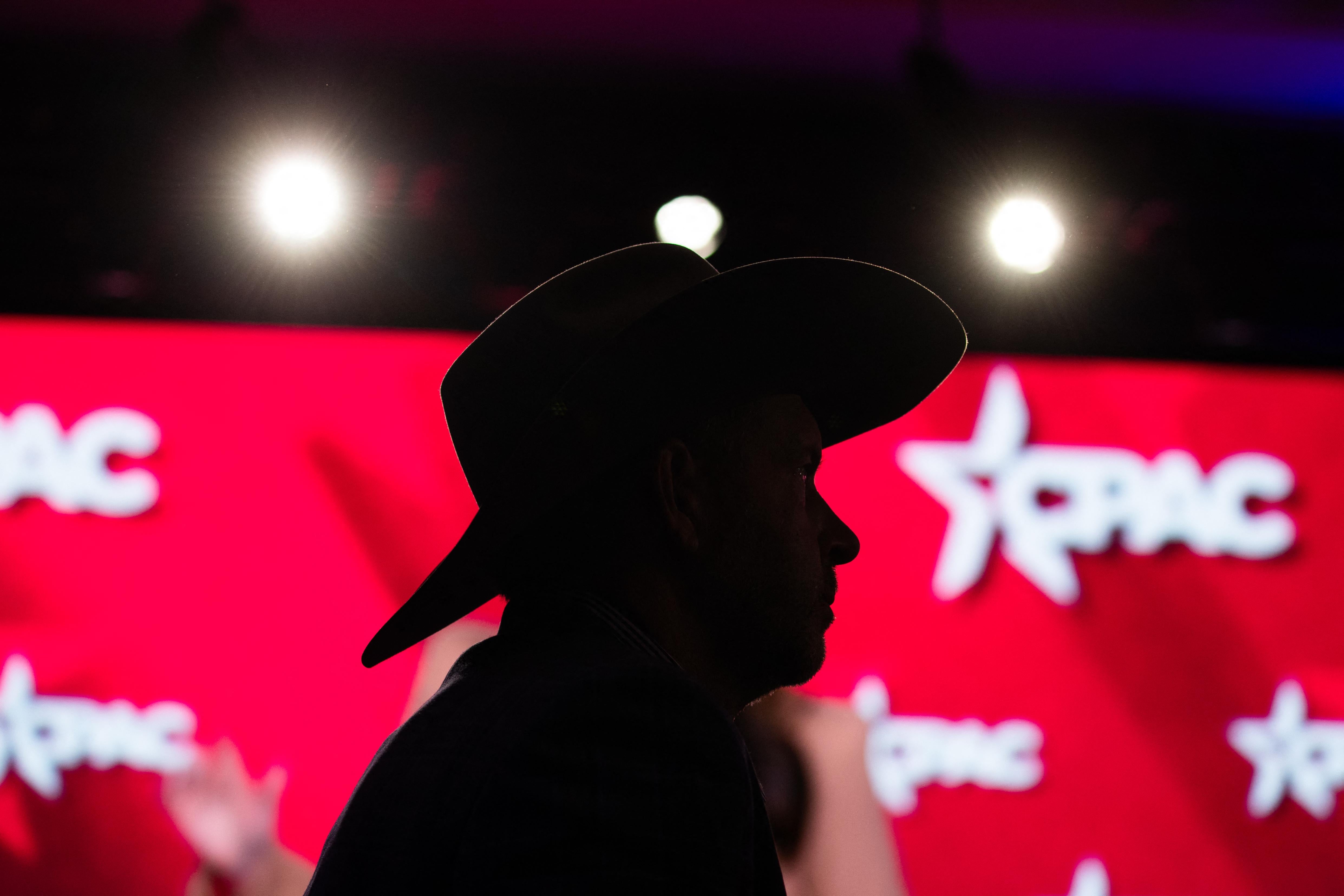
It’s not really any of that now. The event, which ended this Saturday, felt vestigial, held more out of habit than a need to fill any urgent niche for it. There were few students and fewer parties. The political consultant class ignored it. It didn’t feel central even to the MAGA right, for which it has long since become a narrow sectarian gathering. After all, for the first time in a decade, there was not even an appearance from Donald Trump. There wasn’t even an appearance from anyone with the surname Trump.
In 2016 the then presidential candidate had wanted to avoid questions onstage and a potential walkout from attendees who thought that he was insufficiently conservative. In 2026 he just had other things to do.
This was in part because the event had left Washington for Texas. No longer could political dignitaries take a 15-minute drive from the Capitol over to the Maryland conference center just across the river from Old Town Alexandria where CPAC had long been held. Instead, they had to fly to suburban Dallas to a resort complex located five minutes from a Bass Pro Shop and 10 minutes from the airport, which felt like a miniature Texas version of Disney World’s Epcot. There was a sandwich shop built into an ersatz Alamo and an imitation of San Antonio’s River Walk featuring a Mexican restaurant that offered both classic and frozen margaritas.
The result meant not only that few top Trump administration officials showed up—the boldest-face name there was Robert F. Kennedy Jr.—but that there were even fewer members of Congress, a problem exacerbated by the late Friday-night vote in the House in the continued stalemate over funding the Department of Homeland Security. This meant that announced speakers like Reps. Ronny Jackson, of Texas, and Tim Burchett, of Tennessee, never appeared.
At the same time, CPAC has long had an international focus as it has tried to capture the energy (and the financial resources) of the global populist right. There are now miniature CPAC conferences popping up all over the world, in countries ranging from Australia to Poland. It was even announced this year that there would be a CPAC Great Britain in July (though the proffered motto “Make England Great Again” seemed to exclude Scotland and Wales, let alone the still-thornier topic of Northern Ireland).
This has long given the event an international flavor—one can often encounter Orbán die-hards from Hungary and Bolsonaro loyalists from Brazil roaming the halls—but this year the flavor became overpowering. At least a quarter of the attendees were Iranian monarchists who had descended on CPAC for a scheduled speech by Reza Pahlavi, the son of the last shah and current pretender to the throne.
They flocked mostly to a panel on Iran and to Pahlavi’s Saturday afternoon speech. The latter was the only moment of the entire conference that the event space was standing room only. It felt almost like a Trump rally—save that the chants were of “Javid Shah!” and not “Lock her up!” and the flags waved featured the Lion and Sun of the pre-1979 Iranian banner instead of the Stars and Stripes.
Otherwise, the international speakers were as relatively low on star power as the domestic crowd. There was President of Poland Karol Nawrocki, the sons of former Brazilian President Jair Bolsonaro and former British Prime Minister Liz Truss, who seemed almost unescapable at the event. Nigel Farage, once a staple of CPAC, as intrinsic to it as a dig at Hillary Clinton or an ode to Ronald Reagan, was nowhere to be found. Then again, Farage was now a potential British prime minister and no longer just a right-wing novelty.
There was little gossip swapped over barstools, the far-right Groypers did not even muster the energy to try to disrupt it once, and even the left-wing podcasters, forced to buy VIP tickets to the event because their press credentials had been denied, found it all so tedious that they rebooked their flights to leave a day early.
Inside the exhibit hall, there was a carnival game in which contestants could see who could shoot the most water at a target. The winner would get a cowboy doll. Otherwise, most of the focus was around live broadcasts of the right-wing cable and streaming service Real America’s Voice, for which attendees could see and meet MAGA personalities like Steve Bannon and Jack Posobiec. Elsewhere, various booths selling MAGA merchandise and promoting niche right-wing causes predominated. One vendor sold T-shirts with text proclaiming “Legend” alternatively accompanying pictures of Charlie Kirk or, for some reason, Andy Griffith and Don Knotts together in costume from The Andy Griffith Show. Next to it, a group gave out free stickers that proclaimed “A.I. Is Fake and Gay.”
At the organization’s Ronald Reagan Dinner, CPAC’s annual gala event, the speaker was Texas Attorney General Ken Paxton, who is still facing a competitive primary against incumbent John Cornyn in the Lone Star State. Before Paxton gave a version of a campaign stump speech to a crowd in black tie, there was a charity auction on behalf of CPAC. Among the items were a VIP trip to CPAC Poland, a dinner with right-wing influencer Benny Johnson and ousted Border Patrol official Greg Bovino, and a football signed by Frank Murphy, a former NFL wide receiver who had eight catches with the 2001 Tampa Bay Buccaneers and has since become affiliated with the America First Policy Institute.
Perhaps the hottest ticket was a party sponsored by Bannon’s War Room broadcast that was set up by Vish Burra, the former fixer for George Santos. Bannon himself didn’t show up, but Bovino did, along with almost every attendee who had found out about the event. There was an open bar, a roast beef carving station, and trays of appetizers passed around a restaurant located on a Dallas Cowboys–themed golf course. It didn’t have the allure of, say, 2014, when a congressman threw a hot tub party. There wasn’t a touch of excitement when Lady MAGA, a Trumpist drag queen, was booted from the party and livestreamed from the parking lot in protest.
CPAC was never cool, but it was once exciting. In 2026 the conference was no longer a hotbed of insurgents against a Republican establishment, let alone a place where factions of conservatives maneuvered for dominance. It wasn’t even an out-and-out MAGA pep rally that celebrated the ascension of Trump. It didn’t have a clear function anymore. Instead, it just felt like an event held out of habit.