Sign up for the Slatest to get the most insightful analysis, criticism, and advice out there, delivered to your inbox daily.
On Monday, Venezuelan President Nicolás Maduro and his wife Cilia Adela Flores de Maduro were arraigned in a federal courthouse in New York City on charges of drug trafficking, continuing what has been a stunning first few days of 2026. The criminal proceedings—and likely trial—ahead are sure to be rocky and closely watched around the world. How exactly, though, will the Justice Department’s charges against the Maduros play in a court of law? We talked to an expert to find out.
“This is not a trumped-up case. This appears to be a real solid indictment,” Adam Pollock, a former assistant attorney general of New York and now a managing partner of the law firm Pollock Cohen, told me. Pollock believes the U.S. government has built an impressive case against the Maduros, with the indictment suggesting there are cooperating witnesses, recordings of drug deals, and direct links between the Maduros and Venezuelan drug-trafficking networks.
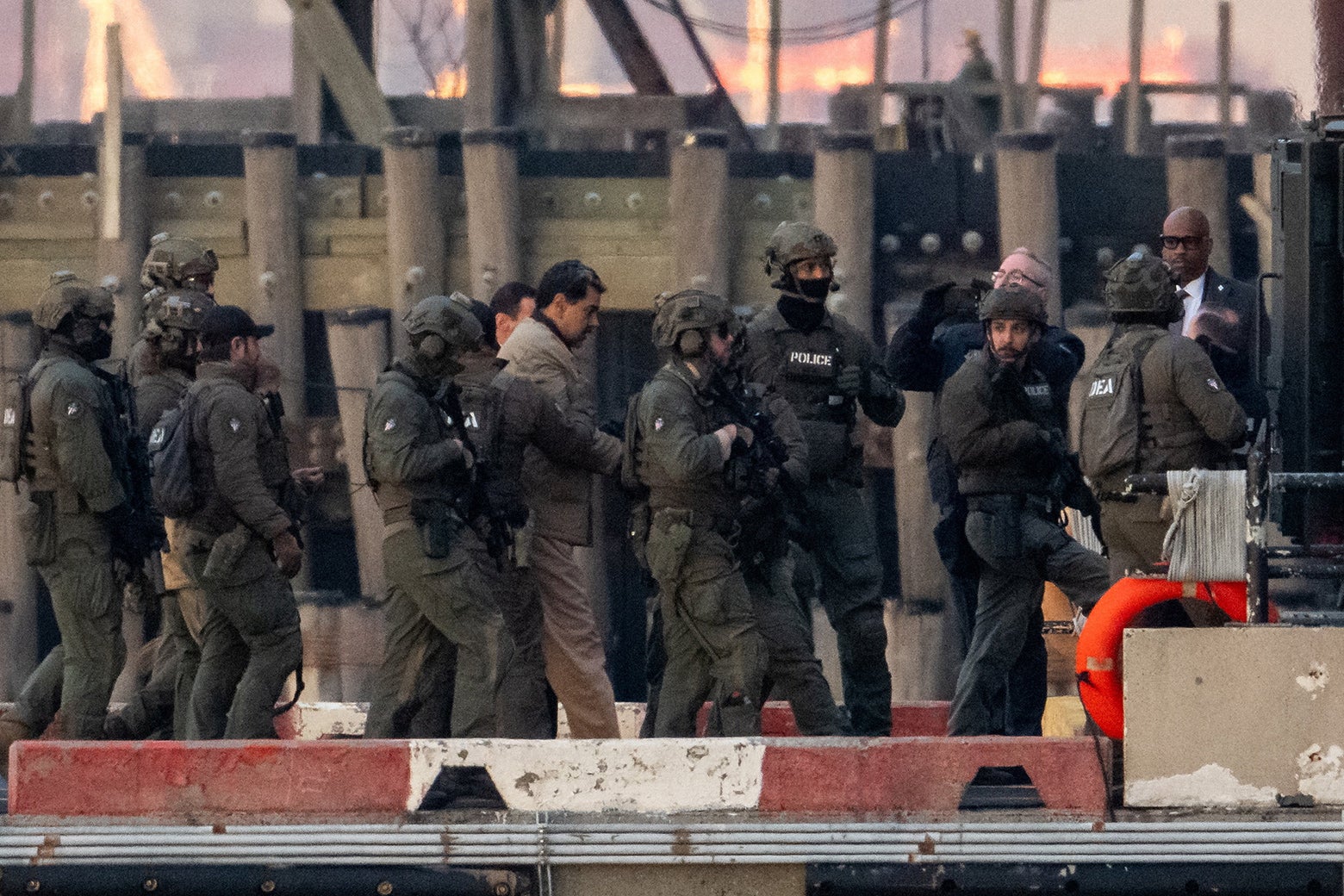
Still, the disturbing and complex facts of the Maduros’ arrest—during an apparently illegal military raid of the country Maduro was leading—makes this case anything but a slam dunk. While entering a plea of not guilty on Monday, the Venezuelan leader told the court that he had been “kidnapped.” “I am innocent. I’m a decent man,” Maduro said during his arraignment. The couple did not seek bail, and were transferred to a New York City jail. Their next court hearing is on March 17.
What comes next? What are all of the charges the indictment makes? What kind of defense could the Maduros use? I spoke with Pollock to get some answers to these questions and to understand the full breadth of the DOJ’s indictment. Our conversation has been edited and condensed for clarity.
Shirin Ali: After reading the entire indictment, how strong of a case do you think the DOJ has here against the Maduros?
Adam Pollock: This is a really robust indictment. You’re dealing with the Southern District of New York, the United States Attorney’s Office, which is a really serious office that doesn’t bring trumped-up political charges. If you compare this to the indictments of James Comey or Letitia James, that were super stamped-on details, very bare-bones, hard to know what the charges were. Why? Because those were vindictive political prosecutions. Here, we have a robust indictment full of detail, meetings, descriptions of events, and going back for, I think, almost two decades. And how do you get this information? You typically have to have either wiretaps or recording in the rooms, or what appears to be the case here is a witness who is cooperating.
There are quite a bit of allegations of actual meetings, payments, and involvement of the Maduros. This does not appear to be a case of him and his wife sitting up at the top of government and turning a blind eye to drug trafficking. To the contrary, there actually seems to be direct involvement.
What charges does the indictment make?
Let’s start with Count 2, cocaine importation conspiracy. I was a little bit surprised here, because the State Department estimated 200 to 250 tons of cocaine were trafficked through Venezuela annually. That’s a lot of cocaine, but doesn’t strike me as a giant number. In general, the United States has had a long-held view that if you commit a crime abroad that affects Americans, then you’re subject to our jurisdiction. You can think about that in many areas, not just drugs, but financial crimes or child abuse. You can think of many areas where merely sitting abroad is not going to immunize you from the reach of American prosecution. And certainly we’ve had a long-held view that drug trafficking that affects Americans is subject to American jurisdiction. So that’s Count 2.
With Count 1, narcoterrorism conspiracy, basically what they are talking about is that the Maduro government apparently supported these rebel groups in Colombia, the Revolutionary Armed Forces of Columbia and the National Liberation Army. Those are designated terrorist groups within the United States, and it is long-standing American policy to oppose those groups and designate them as terrorists. The indictment is saying that the Maduro government supported them through helping them with drug trafficking. Count 3, possession of machine guns, sort of collapses back on itself and also gets to the question everyone’s asking: Is it lawful to arrest the sitting president of a country? Traditionally, there’s been a view in international law that it is not, and certainly that is a defense that Maduro will raise pretrial. In that trial, the United States is going to say that he was not the legitimate leader for two reasons. First, they’ll say Maduro was illegitimate because he was a drug trafficker—that is kind of a tautological argument, but it’s one that will be made. Second, they will say he stole the last two elections.
Is it lawful for heads of states to have armies that have machine guns? Probably. But if they’re really not legitimate heads of states, but actually drug traffickers, and they’re using those machine guns as part of a drug conspiracy, then that adds on as a charge. And then the last charge is the conspiracy to possess machine guns and destructive devices, which is effectively, the same thing.
The indictment also charges Maduro’s son, Nicolás Ernesto Maduro Guerra; two Venezuelan government officials; and a leader of Tren de Aragua, the Venezuelan transnational gang, as part of this narcoterrorism conspiracy. What exactly happens to them now?
Now you start to intersect politics with prosecution. Clearly there was a political motive to bring a large Army force to arrest Maduro and his wife. You don’t expect that a similar military operation would be mounted to arrest the other defendants. Instead, they’ll now lead a more constrained life, where they’ll need to be concerned that, if there’s a change of government, whether they’ll be continued to be protected if they travel abroad and where they can travel to. Life as an indicted felon is harsh, even if you’re abroad; you can kind of continue to live in sanctuary in Venezuela until the government changes. But eventually, there’s going to be a government, whether it’s next month or next year or next decade, that’s more friendly to the United States, and the United States will pressure that government to hand over the suspects.
Numerous times throughout the indictment, the DOJ references that the alleged crimes were committed as far back as 1999. Is there a statute of limitations the U.S. government has to work within? What should we make of this?
I noticed that, but the answer is not particularly anything to note, for two reasons. One is they’re going to argue that it’s an ongoing conspiracy. And second, even if they were unsuccessful in arguing that, they still have enough overt acts of the conspiracy within the statute limitation over the last five or six years.
What strategy do you think the prosecution will take and how do you expect the Maduros to defend themselves?
The latter is slightly more interesting, which is clearly the Maduros will argue that he should receive head-of-state immunity. They might argue that he was illegally kidnapped from Venezuela, but that’s a loser argument because the Supreme Court has been very clear since at least 1886. There is a case called Ker v. Illinois where the defendant was forcibly kidnapped from Peru and brought out to a U.S. Navy ship and then brought back to the United States for prosecution—sounds kind of familiar. The Supreme Court basically said that they’re not going to concern themselves with how the defendant reached the United States’ shores; as long as they’re here, they can be prosecuted. This Supreme Court has reaffirmed that time and time again. So can Maduro make that argument? Sure, but it’s going to lose. I think that he’ll have stronger grounds for making the head-of-state immunity argument, which is interesting when you consider ultimately how far can that argument take you. I guess to the Supreme Court, but what’s this conservative Supreme Court going to do with that? I wouldn’t expect great results for Maduro on that.
I think his best possible strategy is to challenge the evidence at trial. You’ve got to wonder; putting together a criminal drug-trafficking conspiracy case in Venezuela is a technically hard case to put together. They’ve got one cooperator, but you can cross-examine the cooperator, who’s cooperating in hopes of a more lenient sentence. Sounds like the prosecution has some recordings, and you can guess that they probably have some electronic intercepts, but my guess is that kind of old-fashioned trial defense is going to be their strategy here. Now, the prosecution strategy is the converse of that, which is roll up your sleeves and put on the evidence in the way that you would with any other drug conspiracy.
What happens next? How quickly do you foresee this case moving forward?
Not that long, although it depends a whole heck of a lot on how much evidence the government has collected. You’ll start to see that on the docket as the government makes disclosures of evidence to the defendants, known as discovery disclosures. There are cases where there are millions of pages and the defendant needs significant time to review millions of pages of emails, text messages, and listen to hundreds of hours of wiretaps. I suspect that this case is going to be light on paper, emails, and text messages, and my guess is there are not a ton of recordings, because it’s a bit more technologically challenging to get recordings in the room in drug deals in Venezuela. I think that this could be a case with relatively light evidence discovery, in which case you might see this go to trial within a year or so.
