Sign up for the Slatest to get the most insightful analysis, criticism, and advice out there, delivered to your inbox daily.
The videos of Renee Nicole Good’s killing are the stuff of nightmares. On Wednesday, according to footage shot by bystanders, Immigration and Customs Enforcement agent Jonathan Ross appears to shoot Good in the face at point-blank range while she attempts to drive away from another ICE agent prying at her car door. Her wife was reportedly in the seat beside her. “We stopped to videotape, and they shot her in the head,” Good’s wife sobs in one of the most upsetting videos from the encounter. “We have a 6-year-old at school.”
The normal reaction to this incident is horror, rage, and sorrow. A woman is dead, killed by the government under unimaginably traumatic circumstances, her wife mere inches away. She leaves behind three children. Photos from the scene of her death show kids’ toys spilling out of her glove compartment.
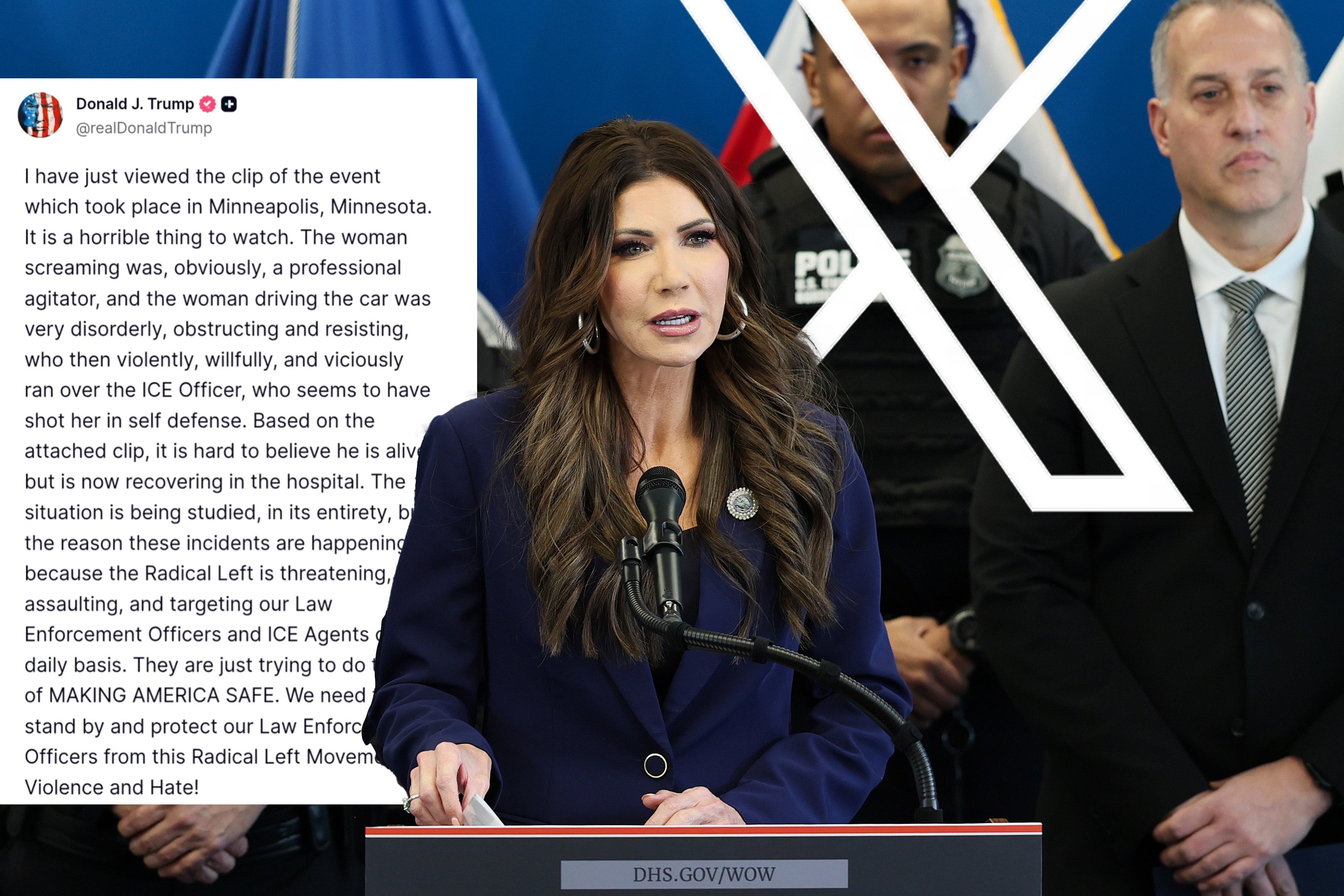
The response from Republican officials seemed to describe a different event altogether. This wasn’t a poet, wife, and mother whose life was cut short by a bullet, but, according to Donald Trump, a “professional agitator” who “violently, willfully, and viciously” ran over her killer. (She didn’t.) In lockstep, GOP leaders lied about Good’s death and to absolve Ross of culpability, then demonized his victim. In their tale, Good was a domestic terrorist who was responsible for her own death. When GOP Sen. Pete Ricketts was asked for his reaction to the shooting on Newsmax, he said, “it’s terrible.” Not Good’s death, mind you, but “these attacks on law enforcement.”
Among their base, today’s GOP is trying to drum out any natural impulses toward compassion, such that there is no imperative to feel—let alone express—any dismay at the killing of an ideological adversary. If Good wasn’t on Trump’s side, the party line goes, she got what was coming to her. The rush to defend Ross is more than a political move to justify Trump’s personal militia run amok. It’s another round in the right wing’s mounting war on empathy.
For the past few years, influential Christian conservatives have been loudly proclaiming that empathy is toxic, a sin, and a tool of the devil. In their view, progressives use the human inclination to care for others as a way to sway evangelicals toward liberal causes, such as tackling racism or saving USAID, the dissolution of which some analysts say has already caused the deaths of 500,000 children worldwide. The innate desire among well-adjusted people to wish their neighbors happy, healthy lives is a political liability for the party of Medicaid cuts, SNAP freezes, ICE raids, refugee bans, and forced childbirth. Elon Musk has called empathy “the fundamental weakness of Western civilization.”
J.D. Vance has endorsed this perspective, too. In a Fox News interview last year, he laid out a warped version of a medieval Catholic doctrine, ordo amoris, to defend the administration’s brutal crackdown on immigrants. “You love your family, and then you love your neighbor, and then you love your community, and then you love your fellow citizens in your own country,” Vance said. “And then after that, you can focus and prioritize the rest of the world.” (Pope Francis later published a letter condemning the deportations that seemed to directly reject Vance’s view: “Christian love is not a concentric expansion of interests that little by little extend to other persons and groups.”)
In this worldview, anyone who poses a danger to those within the inner circles of human worthiness does not warrant much empathy. And it’s easy enough to argue that just about anyone is a threat to one’s family, town, or country, thus exempting them from our responsibilities of care. A drag queen, let’s say. A liberal judge. Someone wearing a Zohran Mamdani T-shirt at the grocery store. A concerned Minnesotan who stopped to film the agents plucking people out of her community.
Once a person is no longer worthy of empathy, they become a justifiable casualty in service to any political aim. There is no need to consider proportionality; killing someone for distracting ICE agents is just as defensible as ending a life on a battlefield. From the right’s perspective, Good’s political views made her fair game, so her gruesome, untimely death by the gun of a masked federal agent need not be met with outrage or remorse. Any empathy for her or her family imperils a greater project: cleansing Minneapolis of immigrants.
It’s a short distance from believing someone’s death is unworthy of mourning to believing they deserved to die, and a short distance from there to inciting more death. The Trump administration’s knee-jerk defense of the ICE agent who killed Good bears echoes of Kyle Rittenhouse, the right-wing wannabe vigilante who, at 17, traveled across state lines to fight Black Lives Matter protesters and ended up killing two of them. In the six years since then, Rittenhouse has become a GOP hero—and, wouldn’t you know, he chimed in just a few hours after Good died. “After thinking about it, should I travel across the state line to Minnesota?” he posted on X with a laughing emoji.
The instinct to recoil at the killing of a fellow person, and to feel some vicarious pain as we consider the loss, is part of what makes us human. Historically, we have pathologized people who lack such impulses; they are known as psychopaths, and their qualities have been deemed incompatible with a functioning society. Empathy is the bedrock of what it means to have a society. To live together under some form of shared governance, we have to start from a place of believing our neighbors should not be shot dead in their cars, and being upset when they are.
Over the past two days, as Republican officials have applauded Ross for killing Good, they have repeatedly lied about the videos of the shooting, insulting the intelligence of observers who know what it looks like to be run over by a car. The lies have been instantaneous, effortless, and shameless: Just look at this photo of Trump aide Natalie Harp in the Oval Office, smugly playing a video for assembled New York Times reporters, as if she could convince them they were seeing something they were not.
Every falsehood spun by Trump and his acolytes is an attempt to degrade their followers’ capacity for empathy past the point of flinching at an innocent woman’s death. The goal is to diminish the ghastliness of Good’s death, and with it, the value of her life.