Sign up for the Slatest to get the most insightful analysis, criticism, and advice out there, delivered to your inbox daily.
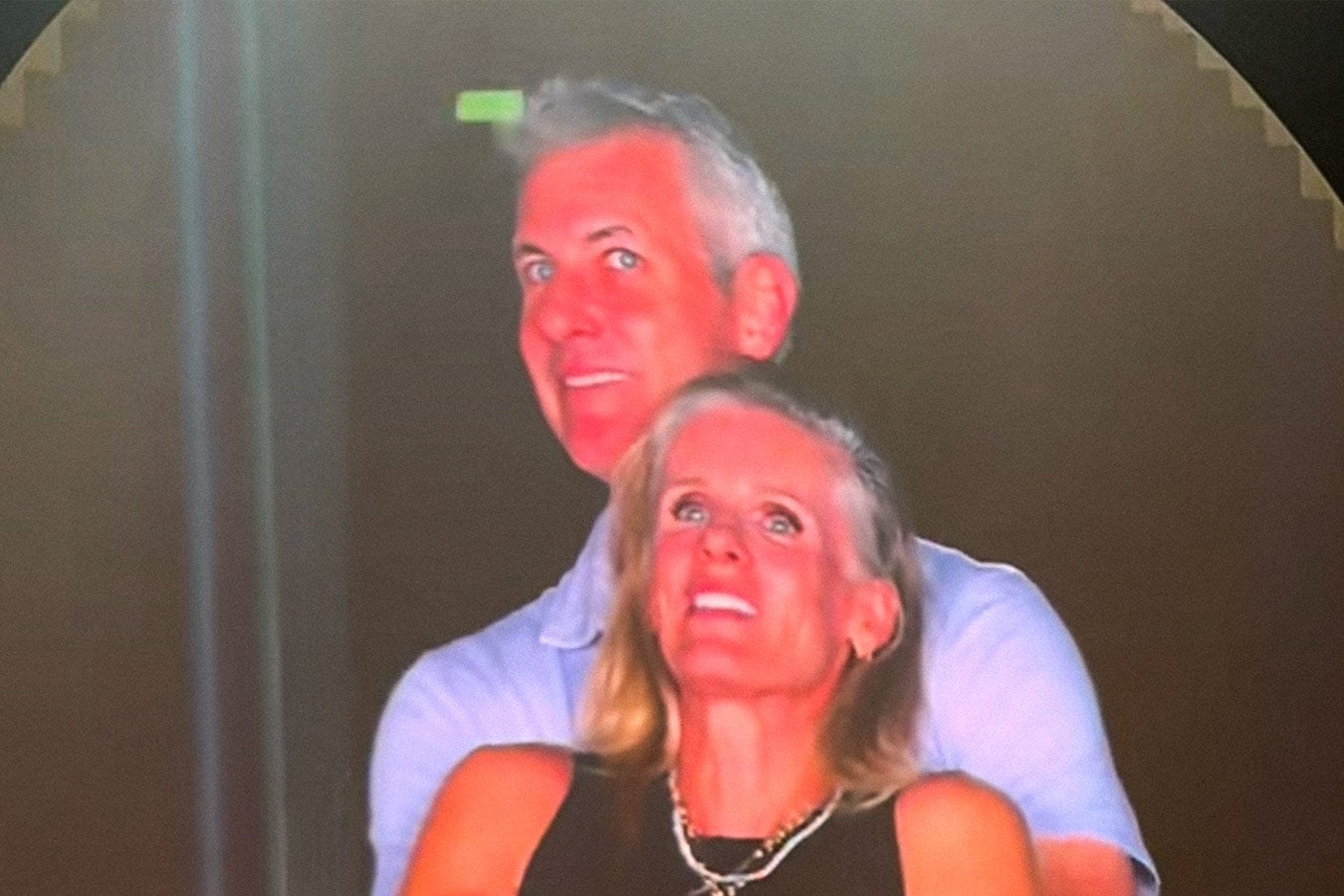
It may have been the costliest Coldplay concert of all time. Andy Byron, then the CEO of data company Astronomer, was caught on camera at a Massachusetts stadium show last week cuddling with a woman who was not only not his wife but also his subordinate: the company’s chief people officer, Kristin Cabot. A concertgoer captured a video of the two executives panicking as they saw their embrace broadcast on a giant screen. It went unbelievably viral, and internet sleuths quickly exposed their identities.
Just a few days later, thanks to his Coldplay-induced indiscretion, Byron was out of a job. “Our leaders are expected to set the standard in both conduct and accountability, and recently, that standard was not met,” read a statement from Astronomer announcing that the board of directors had accepted Byron’s resignation.
There is little precedent for a workplace affair between two previously unknown private citizens receiving so much public interest. Axios reported that within a day of the story blowing up, more than 22,000 news articles were written about Astronomer; of those, about 9,000 mentioned Byron. These pieces reportedly reached more than 15 million readers, comparable to coverage of the death of Pope Francis.
For Byron, the incident has been a world-class, life-upending humiliation. But if these were two adults engaging in a consensual relationship, as appears to be the case, did he really have to lose his job over it?
According to employment lawyer William Grob, when a CEO breaks the rules in their personal life, especially in ways that intersect with their professional life, they put their company at risk. “Even optics of impropriety can affect the organization—not only from a financial standpoint, but from a trust and integrity standpoint,” Grob said. Whether or not Byron was actually cheating—we don’t know the details of his marriage—pursuing a secret romance with a subordinate is a major no-no for any executive.
An undisclosed romantic relationship, whether within or outside the company, creates a potential conflict of interest that could cloud an executive’s judgment. And when a CEO does something as boneheaded as starting an alleged affair with a direct report and flaunting their affection at a Coldplay concert, it casts serious doubt on whether they’re making decisions in the best interests of the organization, which they have a fiduciary duty to do. That could hamper fundraising efforts—Astronomer secured $93 million in Series D funding in May—and give future partners, clients, and shareholders pause.
The poor judgment on view in this case represents such certain liability to Astronomer that, Grob suspects, the virality of the story had little if any effect on the board’s decision to get Byron to resign. Grob has represented multiple companies that found themselves in similar situations that never became public, with CEOs accused of having secret romantic relationships with subordinates. Even without the scrutiny and schadenfreude of millions of onlookers, when investigations confirmed the allegations, board members almost always lost confidence in the person making decisions that bind a multimillion-dollar company. “Probably 10 times out of 10, the CEO does not retain the position,” Grob said.
Since every employee in a company reports to the CEO, it is impossible for someone in that position to have a workplace relationship without a potentially coercive power imbalance that creates legal liability for the company. That Byron’s alleged affair was with not just any direct report but the chief people officer is another tick in the “bad decisionmaking” column. An HR executive is there to advise the C-suite on workforce issues but also to be a trusted and respected resource for employees. “If they feel subject to, perhaps, discrimination or some concern about the workplace, they have to feel like they can go to HR without worrying about losing their jobs,” Grob said. When the top HR boss is romantically involved with the CEO, employees may question that person’s ability to maintain standards of impartiality and confidentiality. (As of publication time, Cabot was still listed as a member of the leadership team on Astronomer’s website.)
To retain the trust of clients, employees, potential investors, and other stakeholders, Byron had to go. Going forward, Astronomer’s interim CEO, a co-founder of the company, will be tasked with rebuilding its reputation as something other than a home for shameless, Coldplay-loving canoodlers. “While I would never have wished for it to happen like this,” he wrote on LinkedIn, “Astronomer is now a household name.”