Listen to Gabfest Reads:
 Apple Podcasts
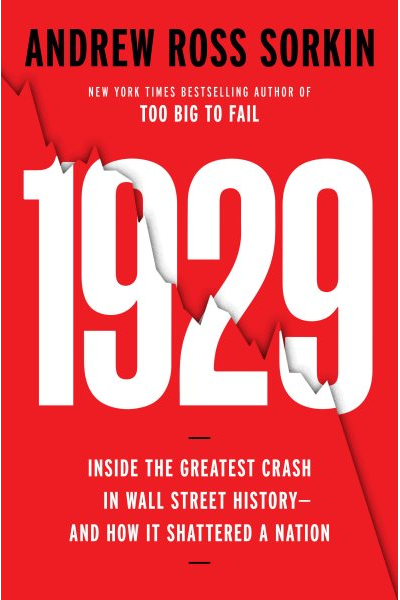
Gabfest Reads is a monthly series from the hosts of Slate’s Political Gabfest podcast. This month, John Dickerson talks with journalist and author Andrew Ross Sorkin about his new book 1929: Inside the Greatest Crash in Wall Street History and How It Shattered a Nation.
Their conversation covers how leverage and speculation reshaped American finance — and what parallels Sorkin sees in today’s tech-driven markets.
This partial transcript has been edited and condensed for clarity.
John Dickerson: So the crash happens over a period of time. And help us understand just how bad it got for people. And speak in general terms so that they don’t get associated with specific … But, I mean, we all hear about the stories of people jumping out of buildings. They jumped out of buildings.
Andrew Ross Sorkin: Oh, they jumped out of buildings. Look, I don’t tell the story in the book, but the truth is, my grandfather, who’s no longer alive, Sidney Sorkin was 11 years old during this period. His older brother was a messenger boy down on Wall Street. And in October of 1929, he used to tell a story about how he had gone down there and was working with his brother to make a little bit of extra money. And in the days after the crash, he watched somebody jump out of a window and kill himself. And for the rest of his 91 years on this planet Earth, he never bought a share of stock. I mean, that was sort of the generational scarring psychologically, I think, that a lot of people had during that period because he watched so many people, family members and others, who lost everything, and saw this gentleman jump out of a window in front of him at 11 years old. And, I mean, I think there was a lot of that.
Now, interestingly, the truth is the data shows—and this may be a little bit weird and against what people think; people think everyone committed suicide, there was suicide left and right after the crash. And it’s true, there were lots of reports of these suicides in the papers—the data shows that there were actually less suicides in 1929 than there were in 1928. So-
John Dickerson: But they were names you know.
Andrew Ross Sorkin: They were names you knew, and they were often connected, at least in terms of the reporting, to financial ruin that led to those things.
John Dickerson: So what did the powers that be do? This crash is happening, the prices are plunging. What were the remedies that were rushed in?
Andrew Ross Sorkin: Well, they were all the wrong remedies. So Andrew Mellon was our Treasury Secretary, and he was a true capitalist with a capital C. I mean, this guy believes, and his view was, “if you made money, good for you. If you lost money, good for you.” And he did not think it was the government’s role to come to the rescue to do anything else. And that really became sort of an austerity position.
And at the same time, there was sort of an austerity position, which is basically “don’t flood the system with money,” which is what we ultimately did in 2008. And I think that was Ben Bernanke’s lesson from this period of time. Ben Bernanke, by the way, did his PhD on the Great Depression.
But I think part of what was happening during that period was you had Hoover saying, “We should raise taxes.” Again, probably the opposite of what you do in one of these moments. Then he decides that he wants to make good on a pledge that he had made to farmers during his election, which is basically to tariff the world. So here we are, Smoot-Hawley gets into effect in 1930. Twelve months later, you have global trade fall by 60 percent. So you can see it. This book is really, it’s about the crash, but the crash is really the first domino. And then the book is really about actually a series of the next dominoes that lead to what ultimately turns out to be unemployment in this country of 25 percent. And you’ve heard of Hoovervilles. Hoovervilles really were tented camps. Tented camps, by the way, interestingly, were being erected in Central Park, literally two or three blocks away from Charlie Mitchell’s home on 74th Street.
John Dickerson: And Hoover curtains were the newspapers they would put up in front of the windows of those tents to keep out the cold.